



The Profitec Go has earned its place as our top-selling espresso machine by striking the right balance between...
Please, visit the correct shop for your location:
USA Site

-
 Why the Profitec Go is our best-selling espresso machine and why customers love itRead more2026-09-29
 -
 Eureka grinders: the Italian craftsmanship behind some of the quietest grinders on the marketRead more
Eureka has spent over a century refining the art of Italian grinder engineering, and quiet operation is where that...
2026-09-28 -
 Why Lelit has become a go-to brand for home espresso enthusiasts worldwideRead more
Lelit has earned its place among the world's most trusted home espresso brands by combining genuine Italian...
2026-09-28 -
 Single Dose Grinders: Why They're Taking Over the Home Barista WorldRead more
Single-dose grinders are reshaping how home baristas think about freshness. Instead of loading a hopper and grinding...
2026-09-24 -
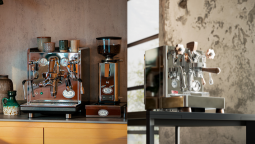 Lelit Bianca vs ECM Synchronika: Which PID Dual Boiler Wins?Read more
Choosing between the Lelit Bianca and ECM Synchronika can be difficult for home baristas looking for a high-end PID...
2026-08-27 -
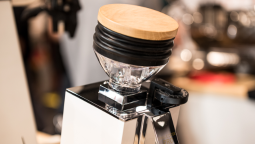 Single Dose vs. Hopper Grinding: Which Setup Suits Your Home Coffee Routine?Read more
Single-dose and hopper grinders suit different home coffee routines. A single-dose grinder is ideal for coffee...
2026-08-27 -
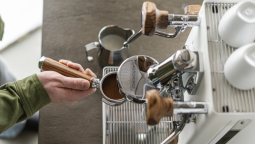 Understanding Group Heads: E61, Saturated & Thermosyphon ExplainedRead more
E61 group head explained how it works, plus saturated and thermosyphon designs compared, so you can choose the right...
2026-08-24 -
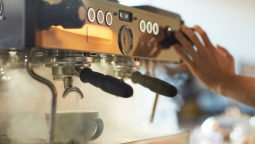 Commercial Espresso Machine Buyers Guide for UK Cafés and RestaurantsRead more
A UK buyer's guide to choosing the right commercial espresso machine boiler types, key features, costs, and matching...
2026-08-21 -
 Mahlkönig E65S vs Eureka Atom: Commercial Grinder ShowdownRead more
Compare the Mahlkönig E65S and Eureka Atom to find the right grinder for your café or home setup. This guide covers...
2026-07-15 -
 Lelit Machine Maintenance Guide: Keeping Your Investment in Top ConditionRead more
Keep your Lelit espresso machine performing at its best with a simple maintenance routine. This guide covers daily...
2026-07-13
Blog categories
Search in blog
Lelit Bianca vs ECM Synchronika: Which PID Dual Boiler Wins?
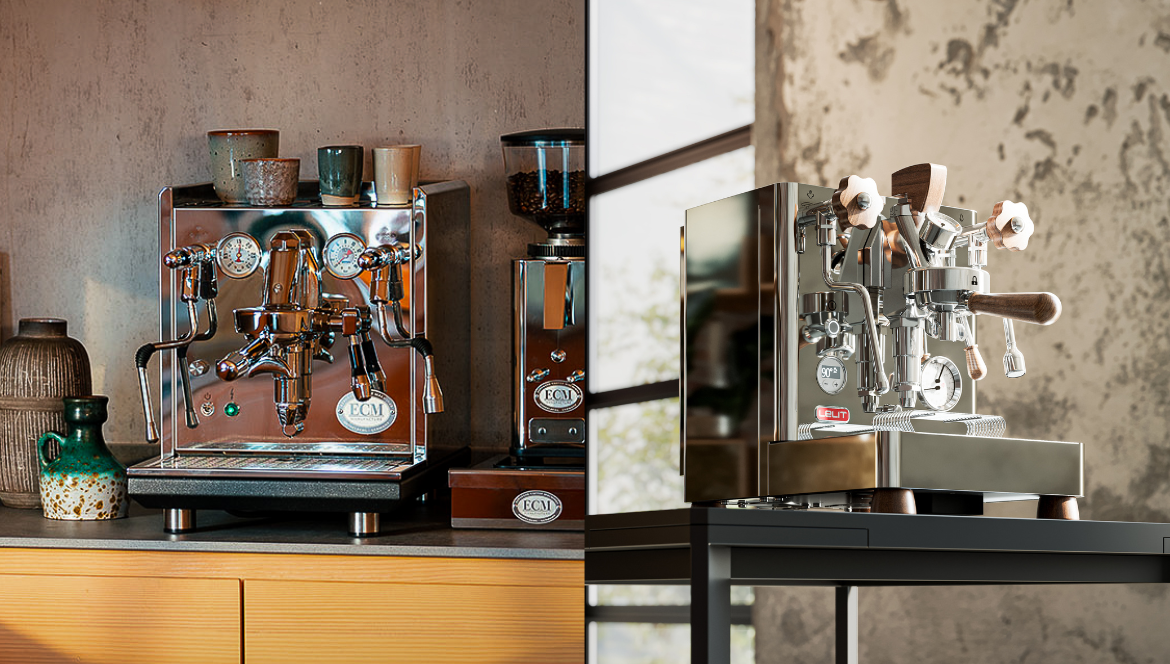
If you've spent any time in home barista forums, you've seen the debate rage on: Lelit Bianca vs ECM Synchronika, which one actually deserves a spot on your kitchen counter? Both machines sit at the top of the prosumer PID dual boiler comparison, and both will comfortably outlast a decade of daily flat whites. But they get there in very different ways.
This guide breaks down how each machine heats, brews, steams and holds up over time, so you can decide which one fits your routine, not just your Pinterest board.
What Makes a Dual Boiler PID Machine Worth the Investment
Before comparing the two head-to-head, it helps to understand why dual boiler machines command a premium in the first place.
A dual boiler setup gives you independent temperature control for brewing and steaming, running simultaneously without the temperature dips single-boiler or heat-exchanger machines suffer from. Add PID (Proportional-Integral-Derivative) control, and you get precise, stable water temperature to within a fraction of a degree.
For anyone chasing consistent espresso shots, not just decent ones, this combination is the real differentiator. It's also why both the Bianca and Synchronika remain benchmarks in any best dual boiler espresso machine 2026 shortlist.
Lelit Bianca vs ECM Synchronika: Design and Build Quality
Lelit Bianca
The Bianca is built in Italy with a stainless steel body and a distinctive flow control paddle on the group head, a feature normally reserved for machines costing considerably more.
Key build highlights:
- E61 group head with flow control paddle
- Stainless steel dual boilers (0.8L brew, 1.5L steam)
- Wooden side panels available for a warmer aesthetic
- Compact footprint, ideal for smaller UK kitchens
ECM Synchronika
The Synchronika takes a more traditional route, leaning on German-Italian engineering heritage with a rotary pump and rock-solid E61 group.
Key build highlights:
- E61 group head with pre-infusion via rotary pump
- Stainless steel dual boilers (0.75L brew, 1.9L steam) for excellent thermal stability
- Full stainless steel casing, built for longevity
- Slightly larger footprint and noticeably heavier
Both machines actually ship with a rotary pump as standard, so plumbing in is straightforward on either. The real distinction is control: the Synchronika's flow-profiling device is an optional add-on, while the Bianca's paddle comes built in, giving it the edge for hands-on shot-to-shot experimentation.
Brewing Performance and Shot Consistency
This is where the primary keyword really earns its place in the conversation because Lelit Bianca vs ECM Synchronika performance differences come down to control philosophy, not raw power.
The Bianca's flow paddle lets you manually shape pressure throughout the shot ideal for experimenting with lighter roasts or unusual origins. It rewards hands-on baristas who enjoy dialling in.
The Synchronika, by contrast, uses its rotary pump for smooth, silent pre-infusion and relies on its insulated stainless steel boilers for exceptional temperature stability shot after shot. It's more "set it and trust it."
Real-world example: A home barista pulling back-to-back shots for a Saturday morning brunch will notice the Synchronika holds temperature more consistently across five or six consecutive pulls, thanks to its slightly larger brew boiler and insulation. The Bianca, meanwhile, gives more room to rescue an underextracted shot mid-pull using the paddle.
Steam Power and Milk Texturing
Both machines use dedicated steam boilers, so milk texturing is fast on either machine, but there are subtle differences worth noting.
|
Feature |
Lelit Bianca |
ECM Synchronika |
|
Steam boiler size |
1.5L |
2L |
|
Steam wand type |
Commercial-style |
Cool-touch wand |
|
Recovery time |
Fast |
Slightly faster (larger boiler) |
For households making multiple milk drinks back-to-back, think a family of four ordering lattes before school runs, the Synchronika's larger steam boiler offers a slight practical advantage.
Noise and Kitchen Placement
Both machines come with a rotary pump as standard, so neither delivers the harsh buzz of a vibration-pump machine. Independent testing puts them within a couple of decibels of each other, with the Synchronika edging very slightly quieter.
If your machine sits near a living space or you're brewing early before the rest of the house is awake, either will be comfortable to live with this isn't a category where one machine has a real advantage over the other.
Price, Maintenance and Long-Term Value
Both machines are investments, typically sitting in a similar UK price bracket, though exact positioning shifts with currency and import costs.
Ongoing considerations:
- Descaling — both need regular descaling if using non-filtered water; a good water filtration setup extends component life significantly.
- Gaskets and group seals — E61 groups on both machines are well-documented and serviceable, with parts widely available.
- Resale value — both hold value well due to brand reputation and build quality, a real plus for premium kitchen-appliance shoppers thinking long term.
If you're upgrading from an entry-level machine, budget for a quality grinder alongside either option; pairing a espresso dual boiler with a mediocre grinder undermines the extra control you're paying for.
Which One Should You Choose?
There's no single winner in the Lelit Bianca vs ECM Synchronika debate it depends on how you want to brew.
- Choose the Bianca if: you want hands-on control over shot pressure, enjoy experimenting, and prefer a slightly smaller footprint.
- Choose the Synchronika if: you want larger boiler capacity for entertaining, a simpler out-of-the-box brewing experience, and a more "dial in once, repeat forever" workflow.
Both remain firmly at the top of any credible PID dual boiler comparison for 2026, and either will comfortably outperform machines twice their price in consistency and control.
Final Thoughts and Next Steps
Choosing between these two machines really comes down to your brewing style rather than which is "better" on paper. Hands-on tinkerers lean Bianca; consistency-first brewers lean Synchronika.
FAQ’s
1. Which is better for beginners: the Lelit Bianca or the ECM Synchronika?
The Synchronika is more forgiving for newer users since it brews well straight out of the box with no manual flow adjustment needed. The Bianca has a steeper learning curve because of its built-in flow paddle, but it rewards practice with more control.
2. Is the ECM Synchronika really quieter than the Lelit Bianca?
Only marginally. Both machines use a rotary pump as standard, and independent testing shows them within a couple of decibels of each other, with the Synchronika edging very slightly ahead. Neither will bother anyone in an open-plan kitchen.
3. Do I need a separate grinder for either machine?
Absolutely. Neither machine includes a grinder, and pairing a dual boiler with a weak grinder undermines the temperature and pressure control you're paying for. A quality burr grinder is essential to see real benefits.
4. Can these machines be plumbed in, or do they need manual filling?
Yes to both. Each machine ships with a rotary pump as standard and a switchable water supply, so you can run from the built-in reservoir or plumb directly into your water line without any upgrade needed.
5. Which machine holds its value better over time?
Both hold value well thanks to strong brand reputation, widely available parts, and proven E61 group heads. Resale value tends to depend more on condition and maintenance history than on which model you choose.
Ready to see them side by side? Explore both the Lelit Bianca and ECM Synchronika in our range at Espressocoffeeshop, and shop the matching grinders and accessories to complete your home setup.
Related posts
-
 Understanding Espresso Machines: Single Boiler, Dual Boiler, and Heat Exchanger Models
Choosing the right espresso machine can elevate your coffee experience to new heights. At Espresso Coffee Shop we...Read more
Understanding Espresso Machines: Single Boiler, Dual Boiler, and Heat Exchanger Models
Choosing the right espresso machine can elevate your coffee experience to new heights. At Espresso Coffee Shop we...Read more -
 Flat or conical burrs? That is the question
The coffee grinder is among the most important equipment for any barista and home barista. When it comes to choosing...Read more
Flat or conical burrs? That is the question
The coffee grinder is among the most important equipment for any barista and home barista. When it comes to choosing...Read more -
 Arabica vs. Robusta: the main differences between the two most popular coffee varieties
When it comes to choosing the perfect coffee, there are two names that immediately come to mind: Arabica and...Read more
Arabica vs. Robusta: the main differences between the two most popular coffee varieties
When it comes to choosing the perfect coffee, there are two names that immediately come to mind: Arabica and...Read more -
 The first store Espresso Coffee Shop in Italy!
We are excited to announce the opening of our Temporary Shop in Milan, an must-visit meeting point for all coffee...Read more
The first store Espresso Coffee Shop in Italy!
We are excited to announce the opening of our Temporary Shop in Milan, an must-visit meeting point for all coffee...Read more -
 Different types of group heads: complete guide to help you choose the right espresso machine
When choosing an espresso machine, the group head is one of the most important components to consider. It plays a key...Read more
Different types of group heads: complete guide to help you choose the right espresso machine
When choosing an espresso machine, the group head is one of the most important components to consider. It plays a key...Read more
Leave a comment