



The Profitec Go has earned its place as our top-selling espresso machine by striking the right balance between...
Please, visit the correct shop for your location:
USA Site

-
 Why the Profitec Go is our best-selling espresso machine and why customers love itRead more2026-09-28
 -
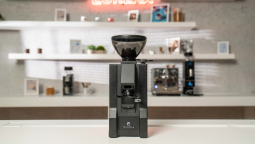 Eureka grinders: the Italian craftsmanship behind some of the quietest grinders on the marketRead more
Eureka has spent over a century refining the art of Italian grinder engineering, and quiet operation is where that...
2026-09-28 -
 Single Dose Grinders: Why They're Taking Over the Home Barista WorldRead more
Single-dose grinders are reshaping how home baristas think about freshness. Instead of loading a hopper and grinding...
2026-09-24 -
 Lelit Bianca vs ECM Synchronika: Which PID Dual Boiler Wins?Read more
Choosing between the Lelit Bianca and ECM Synchronika can be difficult for home baristas looking for a high-end PID...
2026-08-27 -
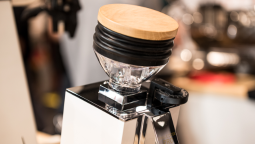 Single Dose vs. Hopper Grinding: Which Setup Suits Your Home Coffee Routine?Read more
Single-dose and hopper grinders suit different home coffee routines. A single-dose grinder is ideal for coffee...
2026-08-27 -
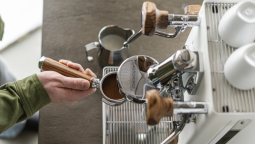 Understanding Group Heads: E61, Saturated & Thermosyphon ExplainedRead more
E61 group head explained how it works, plus saturated and thermosyphon designs compared, so you can choose the right...
2026-08-24 -
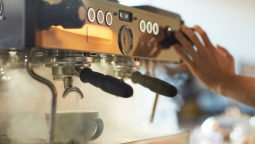 Commercial Espresso Machine Buyers Guide for UK Cafés and RestaurantsRead more
A UK buyer's guide to choosing the right commercial espresso machine boiler types, key features, costs, and matching...
2026-08-21 -
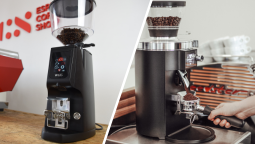 Mahlkönig E65S vs Eureka Atom: Commercial Grinder ShowdownRead more
Compare the Mahlkönig E65S and Eureka Atom to find the right grinder for your café or home setup. This guide covers...
2026-07-15 -
 Lelit Machine Maintenance Guide: Keeping Your Investment in Top ConditionRead more
Keep your Lelit espresso machine performing at its best with a simple maintenance routine. This guide covers daily...
2026-07-13 -
 How Burr Size and RPM Affect Grind Quality: A Technical Guide for Home BaristasRead more
Discover how burr size and grinder RPM shape espresso flavour, consistency, heat, and extraction quality. This guide...
2026-07-10
Blog categories
Search in blog
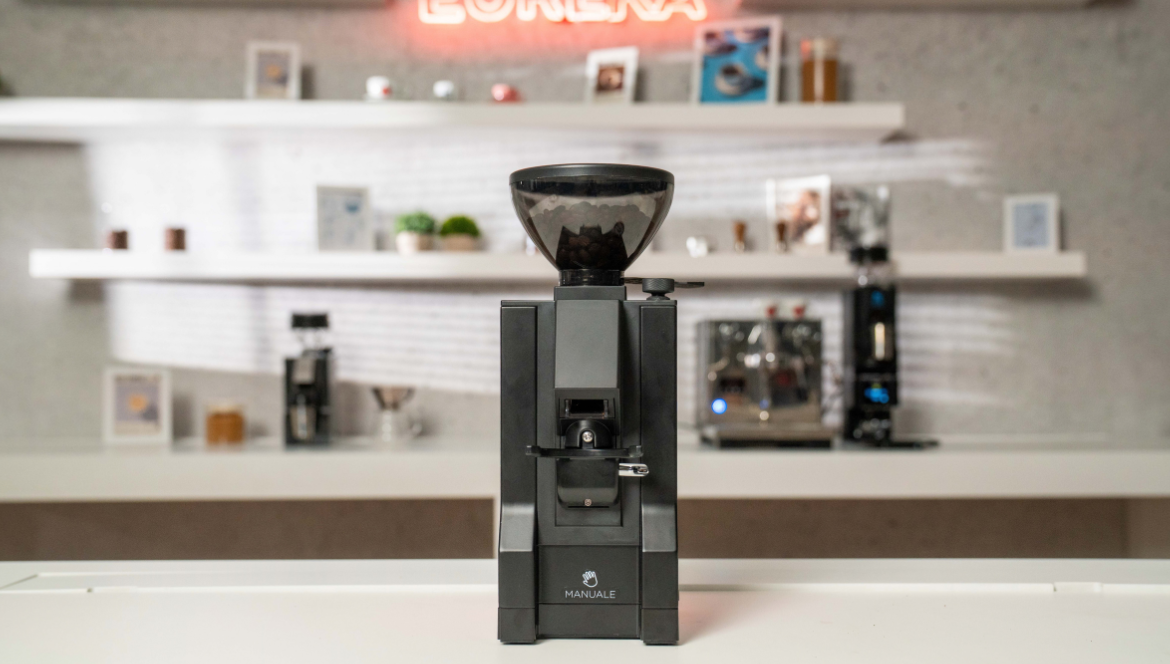
Eureka grinders: the Italian craftsmanship behind some of the quietest grinders on the market
There's a specific moment every home barista remembers: the first time a grinder wakes the whole house up before 7 am. If you've ever winced at that sound, you'll understand why so many UK coffee lovers eventually land on a Eureka espresso grinder. Founded in Italy in 1920, Eureka has spent decades applying that manufacturing heritage to coffee grinders, aiming to solve the exact problem that makes espresso mornings stressful: noise, mess, and inconsistent grind size.
This isn't just a brand with a nice logo. Eureka is one of the few grinder manufacturers that still designs, engineers, and assembles its machines in-house, in Robassomero, near Turin. That heritage is why their grinders show up so often in speciality coffee shops and increasingly in UK kitchens.
Italian Grinder-Making
Eureka didn't start as a coffee company. It began making agricultural machinery, and that industrial mindset never left the business. When Eureka moved into coffee grinders, it applied the same obsession with mechanical precision used in heavy-duty equipment.
Eureka's grinders are designed and manufactured in Robassomero, near Turin, with production kept in-house rather than outsourced. Keeping design and manufacturing under one roof is part of why the brand has built a reputation among speciality cafés and home baristas alike.
You can see this design approach in a model like the Eureka Mignon Specialità Coffee Grinder, which fits a compact UK kitchen worktop while still offering stepless micrometric adjustment, a feature more commonly found on larger commercial grinders.
Why Eureka Grinders Are Designed to Run Quieter
Noise is where Eureka has genuinely set itself apart. Most entry-level grinders rely on high-RPM motors that scream through beans in seconds, which is fast but loud. Eureka instead uses low-speed, high-torque motors paired with precision-cut burrs.
The aim is a grinder that works the beans more gently, without sacrificing consistency. A few design choices contribute to this:
- Lower motor speed, which reduces the high-pitched whine associated with faster-spinning grinders
- Sound-dampened housing intended to absorb vibration rather than amplify it
- Balanced burr sets, reducing rattle from misaligned parts
- Direct-drive engineering, removing the extra mechanical noise that belt-driven systems can add
This design approach carries across the range, from entry-level models to a stepless unit like the Eureka Helios 65 Coffee Grinder. If quiet operation matters to you, it's worth checking each product page for the manufacturer's specific noise-level figures before you buy.
The Eureka Espresso Grinder Range: Finding the Right Fit
Eureka's catalogue is genuinely wide, from compact single-doser home units to commercial-grade grinders built for high-volume cafés. That range is exactly why so many buyers search for the best coffee grinder UK shops actually stock, rather than settling for whatever's in a supermarket bundle.
Entry-Level and Everyday Home Grinders
- Eureka Mignon Manuale Coffee Grinder — £230. Fully manual doser grinder with flat burrs, no programmable dosing
- Eureka Mignon Crono Coffee Grinder — £245.90. Adds a programmable timer for dose control
- Eureka Mignon Specialità Coffee Grinder — £380. Compact chassis with stepless micrometric adjustment
Step-Up and Prosumer Grinders
- Eureka Atom Specialty 65 Coffee Grinder — from £664 (RRP £830). 65mm flat burrs, on-demand grinding
- Eureka Helios 65 Coffee Grinder — from £680 (RRP £850). 65mm burrs, stepless adjustment, on-demand grinding
Commercial-Grade Power at Home
- Eureka Atom Pro Coffee Grinder — £1,390. Commercial-spec chassis and burr set built for high daily throughput.
Every one of these sits within Eureka's dedicated coffee grinder collection, so you can compare burr size, hopper capacity, and finish before deciding.
Standalone Grinder or Espresso Machine With Grinder?
This is the question we get asked most. Buying a standalone coffee grinder gives you more control; you can match burr size and grind speed to your exact machine and beans. It's also easier to upgrade later without replacing your whole setup.
An espresso machine with a built-in grinder is the simpler route if space or budget is the priority, since everything runs from one unit. The trade-off is usually a smaller burr and less flexibility on grind settings.
If you already own an entry-level all-in-one machine, this is often where people start looking at Eureka. Pairing your existing machine with a dedicated Eureka espresso grinder can improve shot consistency, since you gain more control over grind size than a built-in grinder typically allows.
An Illustrative Example: Upgrading From a Bundled Grinder
Here's a hypothetical scenario to illustrate the point: someone bought an entry-level espresso machine with a built-in grinder two years ago. The shots were fine at first, but extraction became inconsistent, and the grinder started sounding rough every morning.
Swapping just the grinder for a standalone model like the Eureka Mignon Crono could address both issues. Its programmable dosing and finer grind adjustment offer more control than most built-in grinders, and the espresso machine itself wouldn't need replacing- only the grinder.
How to Choose the Right Eureka Grinder for You
A few practical questions narrow this down fast:
- How much daily volume do you need? Compact Mignon-series grinders suit lighter, everyday use; the larger 65mm+ burrs on the Atom and Helios ranges are built for higher throughput.
- Do you want stepless or stepped adjustment? Stepless models let you fine-tune grind size in small increments, which is useful if you experiment with different roasts and origins.
- Where will it sit? Check hopper height against your cupboards; taller hoppers hold more beans but need more clearance.
- Doser or on-demand? A doser grinder dispenses ground coffee from a small chamber, one dose at a time, which is fast for repeat use but means some ground coffee sits before use. An on-demand (doserless) grinder grinds beans straight into the portafilter as needed, so there's no ground coffee resting between shots.
If you're still deciding between models, our team can talk through grind settings, burr sizes, and which Eureka pairs best with the machine you already own.
Final Word
A Eureka espresso grinder isn't quiet by accident. It reflects a manufacturing approach rooted in Italian engineering, precision-cut burrs, lower motor speeds, and in-house production in Robassomero. Whether you're buying your first coffee grinder or upgrading a tired bundled unit, the range covers everything from compact home grinders to commercial-grade machines.
Ready to find yours? Explore the full Eureka grinder collection and shop the model that fits your setup, your beans, and your mornings.
FAQs
1. What design choices help a Eureka espresso grinder run quieter?
Eureka's grinders typically combine lower motor speeds, sound-dampened housing, and balanced burr sets. Together, these are intended to reduce vibration and motor noise. Exact noise levels vary by model, so check the specification sheet for the grinder you're considering.
2. Are Eureka grinders made in Italy?
Eureka's grinders are designed and manufactured at the company's facility in Robassomero, near Turin. Check the specific product listing for confirmation on individual models.
3. Which Eureka grinder is best for a beginner?
The Eureka Mignon Manuale or Mignon Crono are the easiest starting points. Both are compact, straightforward to dial in, and priced for someone upgrading from a blade grinder or a bundled machine grinder.
4. Should I buy a standalone grinder or an espresso machine with a grinder built in?
A standalone Eureka espresso grinder gives more control over burr size and grind settings, and it's easier to upgrade later. An espresso machine with a grinder suits smaller kitchens or simpler setups, though it trades away some of that flexibility.
5. How do I choose between the Mignon, Atom, and Helios ranges?
It comes down to volume and adjustment style. Mignon models are compact and suit lighter everyday use, while Atom and Helios models offer a larger 65mm+ burr with stepless adjustment for higher-throughput households.
6. Do Eureka grinders work well with different roast styles?
Yes. Stepless models like the Mignon Specialità, Atom Speciality, and Helios 65 let you fine-tune grind size precisely, which is useful if you switch between light, medium, and dark roasts or different origins.
Posted in:
Espresso gear
Related posts
-
 Understanding Espresso Machines: Single Boiler, Dual Boiler, and Heat Exchanger Models
Choosing the right espresso machine can elevate your coffee experience to new heights. At Espresso Coffee Shop we...Read more
Understanding Espresso Machines: Single Boiler, Dual Boiler, and Heat Exchanger Models
Choosing the right espresso machine can elevate your coffee experience to new heights. At Espresso Coffee Shop we...Read more -
 How to properly store coffee
If you, too, are a true coffee enthusiast, meticulously selecting the varieties you like best and eagerly...Read more
How to properly store coffee
If you, too, are a true coffee enthusiast, meticulously selecting the varieties you like best and eagerly...Read more -
 Bottomless portafilter? Here are the aspects to be considered
The search for the perfect espresso is a long road, and there are several tools that can help achieve the perfect...Read more
Bottomless portafilter? Here are the aspects to be considered
The search for the perfect espresso is a long road, and there are several tools that can help achieve the perfect...Read more -
 PROFITEC DRIVE: the home machine with professional performance
Drive is the most recent entry in the Profitec household and the evolution of the already highly appreciated Pro 700....Read more
PROFITEC DRIVE: the home machine with professional performance
Drive is the most recent entry in the Profitec household and the evolution of the already highly appreciated Pro 700....Read more -
 All about a good tamping
To make good coffee, it is important to have the right equipment, quality coffee and not only. It is also necessary...Read more
All about a good tamping
To make good coffee, it is important to have the right equipment, quality coffee and not only. It is also necessary...Read more
Leave a comment