




Single origin or blend: which makes better espresso? This guide compares flavour, consistency and ease of dialling...
-
 Single Origin Coffee vs Blends: Which is Better for Espresso?Read more2026-11-25
-
 How to Deep Clean Your Espresso Machine: A Complete GuideRead more
Learn how to deep clean the best espresso machine in your kitchen with this UK guide. It covers backflushing,...
2026-11-25 -
 Stepped vs Stepless Grinders: Which is Better for Espresso?Read more
Stepped or stepless espresso grinder? Learn how each adjustment system works, where each one shines, and which suits...
2026-11-23 -
 Maintenance tips to keep your Rocket Espresso machine pulling perfect shots for yearsRead more
Keep your coffee espresso machine pulling perfect shots for years. This guide covers daily habits, weekly...
2026-11-20 -
 Mahlkönig E64 WS reviewed: why it's our best-selling grinder and what makes it specialRead more
The Mahlkönig E64 WS is a home espresso grinder that weighs every dose to 0.1 g with Grind-by-Weight, offers...
2026-10-30 -
 Milk Jugs for Latte Art: Size, Shape and Material GuideRead more
Choosing the right milk jug can make latte art easier to learn and more consistent to repeat. This guide covers jug...
2026-10-26 -
 Cold Brew vs Iced Espresso: Key Differences and How to Make BothRead more
Cold brew and iced espresso both cool down your coffee routine, but they are made and taste very different. Cold brew...
2026-10-23 -
 Eureka Atom vs. Eureka Oro: a detailed comparison for the discerning home baristaRead more
Eureka Atom or Eureka Oro? Compare speed, burrs, hopper size, noise and current UK prices to find the right grinder...
2026-10-22 -
 Why the Profitec Go is our best-selling espresso machine and why customers love itRead more
The Profitec Go has earned its place as our top-selling espresso machine by striking the right balance between...
2026-09-29 -
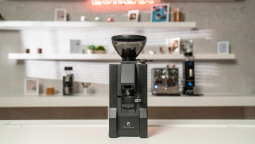 Eureka grinders: the Italian craftsmanship behind some of the quietest grinders on the marketRead more
Eureka has spent over a century refining the art of Italian grinder engineering, and quiet operation is where that...
2026-09-28
Blog categories
Search in blog
Stepped vs Stepless Grinders: Which is Better for Espresso?
You nudge your grind by one click, and your shot goes from sour and gushing to bitter and choked. If that sounds familiar, the grinder's adjustment system is often the culprit, not your technique. Choosing between a stepped and a stepless espresso grinder is one of the most practical decisions a home barista makes, because it decides how easily you can dial in every new bag of beans.
This guide explains how each system works, where each one shines, and how to pick the right espresso grinder for your machine and budget.
Stepped vs Stepless: What Is the Actual Difference?
Both types are true burr grinders, and that matters more than the adjustment style. A burr grinder espresso setup crushes beans between two burrs for an even particle size, something blade grinders cannot do. The difference is how you move those burrs closer together or further apart.
How a Stepped Grinder Works
A stepped grinder moves the burrs in fixed, numbered clicks. You can pick setting 14 or 15, but never 14.5. Think of it like a bicycle's gears: each position is set in advance.
How a Stepless Grinder Works
A stepless grinder uses a threaded collar or worm gear so that the burrs can sit at any distance apart. There are no clicks. You turn the dial a tiny amount, or a lot, and the grind follows. This is why it is more common on higher-end models.
Stepped Grinders: Strengths and Limits
A stepped espresso grinder is where many home baristas begin, and for good reason.
Where Stepped Works Well
Repeatability: Setting 12 is always setting 12, so you can note it down and return to it.
Simplicity: Easy for beginners who want to adjust without second-guessing.
Price: Stepped mechanisms are cheaper to build, so entry-level models often use them.
Where Stepped Falls Short for Espresso
Espresso is unforgiving, and a stepped espresso grinder can struggle with that. A very small change in grind size can shift your shot time by several seconds. If one click is too coarse and the next is too fine, there is no setting in between, so you end up compensating with dose or yield instead. Some stepped models add micro-steps, which narrows the gap, but you are still working within fixed positions.
Stepless Grinders: Strengths and Limits
Precision for Every Bean
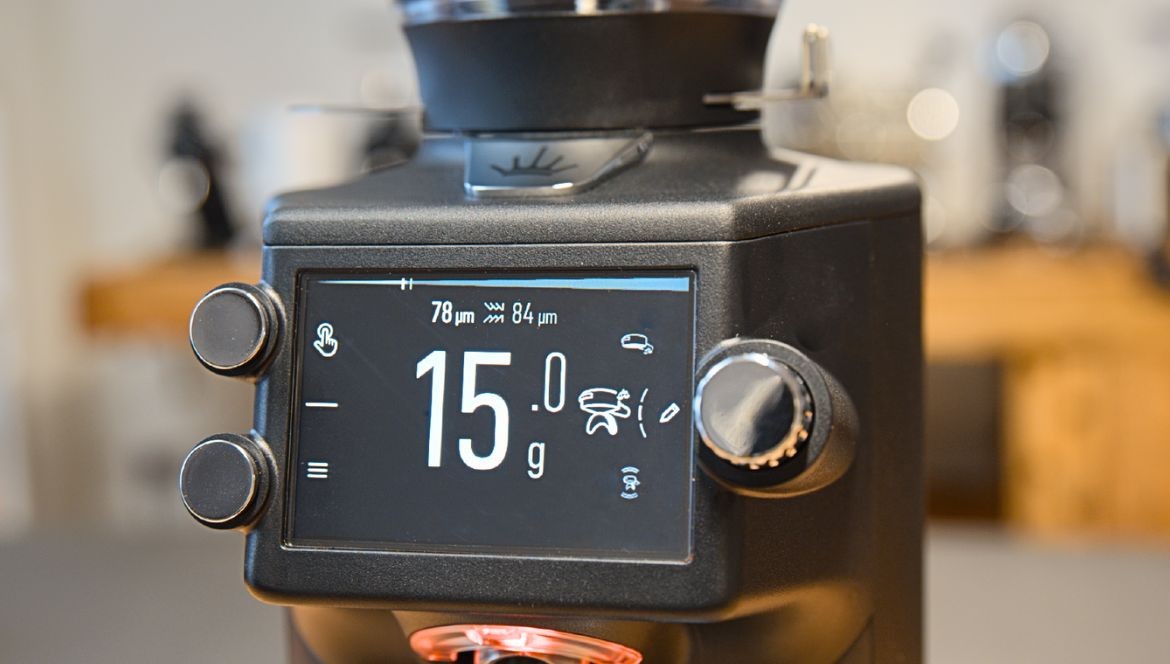
With a stepless espresso grinder, you can chase the exact flow rate you want. This helps when you switch between roasts, or when beans age and shots start running faster. Higher-end models such as the Mahlkönig E64 WS Grind By Weight Coffee Grinder (£890 at the time of writing) combine fine, electronically controlled grind adjustment with dosing accurate to 0.1 g so that you can fine-tune both grind and dose.
The Trade-Offs
Less obvious repeatability: With no numbered clicks, returning to a previous setting depends on a scale or your own markings.
A learning curve: Total freedom can feel like too many options at first.
Cost: Stepless mechanisms usually sit higher in the price range.
Which Espresso Grinder Is Better for Your Setup?
Neither is universally better. The right espresso grinder depends on your machine, your habits and how much tinkering you enjoy.
Choose stepless if:
You want to fine-tune shot time in small increments, rather than compromise between two settings.
You change beans often, or buy speciality roasts that need careful dialling in.
You prefer a single-dose workflow. Our guide to single dose vs. hopper grinding explains how that choice affects your routine.
Choose stepped if:
You drink the same blend most days and want a set-and-forget routine.
You are upgrading from pre-ground coffee and want a simple first step.
Your budget is tight, and you would rather spend on fresh beans.
If you are still deciding on a machine, pairing it with the right grinder matters as much as the model itself. Browse our espresso machines to see what suits your kitchen and skill level.
Real-World Example: Dialling In a New Bag
Imagine you own an entry-level machine and buy a new light roast. Your target is 18 g in, 36 g out, in roughly 25 to 30 seconds. The figures below are illustrative.
On a stepped grinder, setting 12 gives you a 22-second shot, which is too fast. Setting 11 gives you 34 seconds, which is too slow. Neither lands in the zone, so you change your dose or accept a compromise.
On a stepless grinder, you turn the dial a fraction finer than your 22-second setting and land at 28 seconds. One small move, and the shot is balanced. This is the situation where stepless adjustment earns its place. Neither result is wrong. The stepped grinder is simply less able to close that last gap, which is why drinkers who change beans often tend to prefer stepless.
What to Check Before You Buy an Espresso Grinder
If you plan to buy espresso grinder equipment, look beyond the adjustment type:
Burr size and quality: Larger burrs generally grind faster and more evenly.
Retention: Beans left inside the grinder affect freshness and dose accuracy.
Noise and size: Important in a UK kitchen, especially in the morning.
Workflow: Decide between a hopper and a single-dose design. Our article on single dose grinders is a useful starting point.
A good espresso grinder should also be easy to live with. If cleaning, dosing or adjusting feels like a chore, you will use it less.
Brand matters too. Eureka is known for quiet, well-built Italian models, as covered in our look at Eureka grinders. When comparing any coffee grinder UK retailers stock, check the product page for the adjustment type, since it is not always obvious from the name.
Conclusion
A stepped espresso grinder offers simplicity, repeatability and a lower price. A stepless espresso grinder offers precision and control, which suits anyone chasing the best from each bean. For most home baristas who care about espresso, stepless gives the most flexibility, while stepped remains a sensible choice for a steady routine and a tighter budget.
Whichever route you take, the best espresso grinder is the one that matches how you actually make coffee. Ready to upgrade? Shop our full range of coffee grinders at Espressocoffeeshop and get expert help choosing the right one.
FAQs
1. Is a stepless espresso grinder better?
Often yes, because it lets you make very small adjustments. Espresso is sensitive to tiny grind changes, so that control helps you reach a balanced shot.
2. Is a stepped espresso grinder good enough?
Yes. Many stepped models produce excellent shots, especially if you use the same beans regularly. Models with micro-steps give extra fine-tuning.
3. Are stepless grinders harder to use?
Not harder, but they take a little more attention. With no clicks, you need to note your dial position yourself.
4. Do I need a burr grinder for espresso?
Yes. A burr grinder gives the consistent particle size espresso needs. Blade grinders produce uneven grounds and unpredictable shots.
5. What should I check before buying an espresso grinder?
Check the adjustment type, burr size, retention, noise, and whether it is hopper-fed or single-dose. Match these to your machine and routine.
Related posts
-
 Understanding Espresso Machines: Single Boiler, Dual Boiler, and Heat Exchanger Models
Choosing the right espresso machine can elevate your coffee experience to new heights. At Espresso Coffee Shop we...Read more
-
 How to properly store coffee
If you, too, are a true coffee enthusiast, meticulously selecting the varieties you like best and eagerly...Read more
-
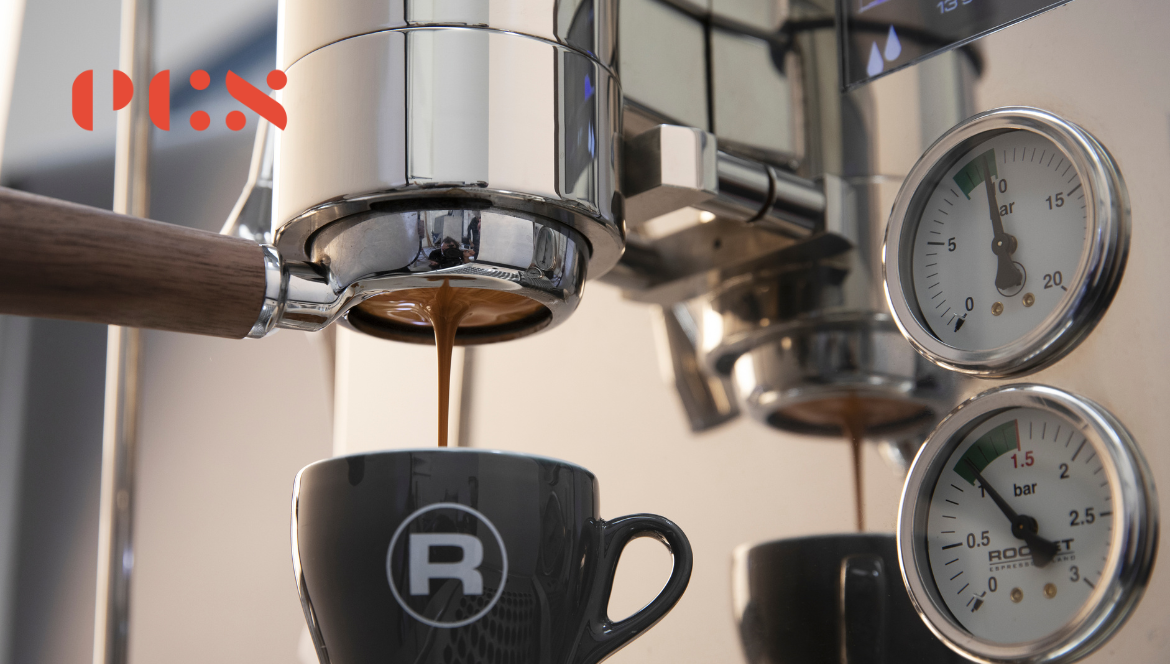 Bottomless portafilter? Here are the aspects to be considered
The search for the perfect espresso is a long road, and there are several tools that can help achieve the perfect...Read more
-
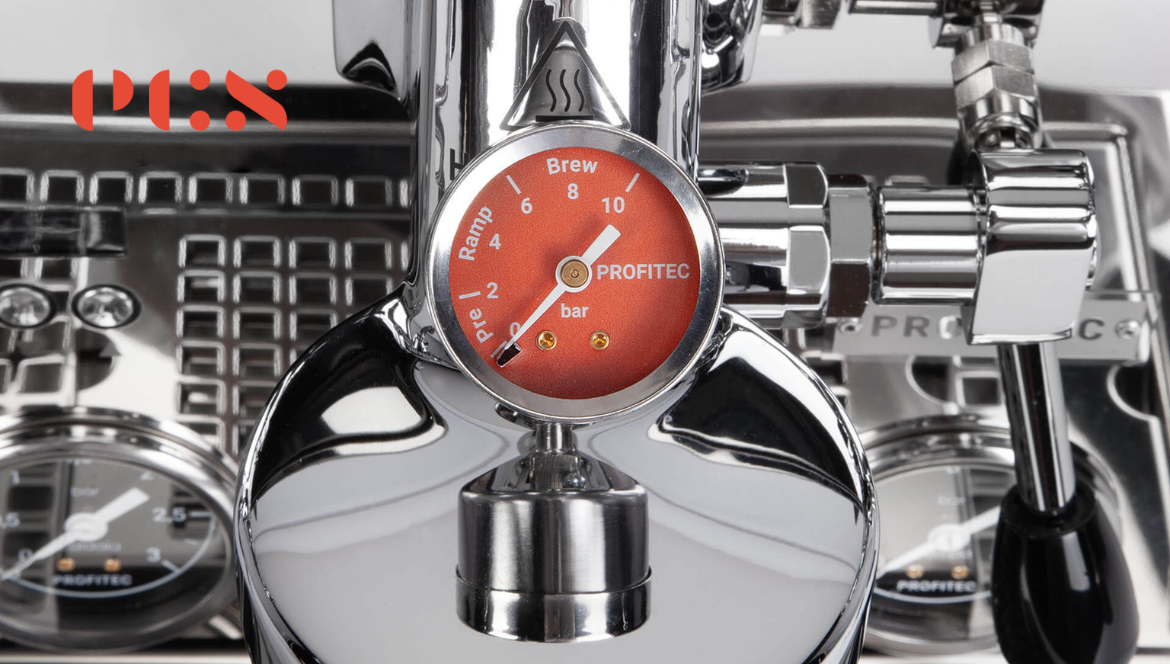 PROFITEC DRIVE: the home machine with professional performance
Drive is the most recent entry in the Profitec household and the evolution of the already highly appreciated Pro 700....Read more
-
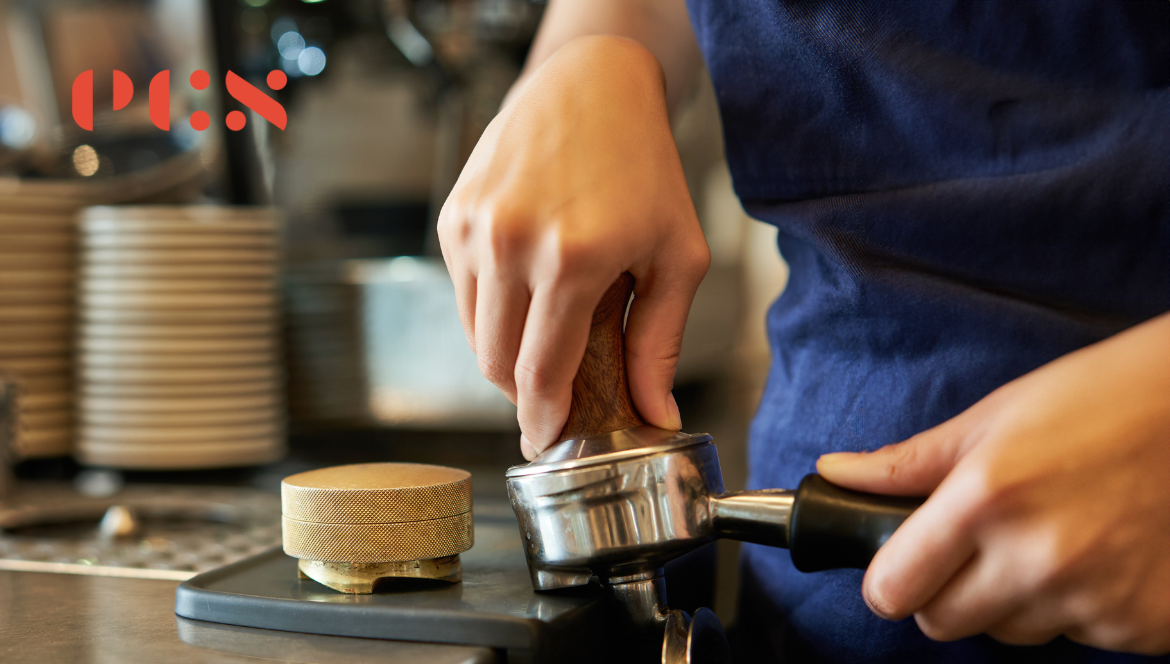 All about a good tamping
To make good coffee, it is important to have the right equipment, quality coffee and not only. It is also necessary...Read more